
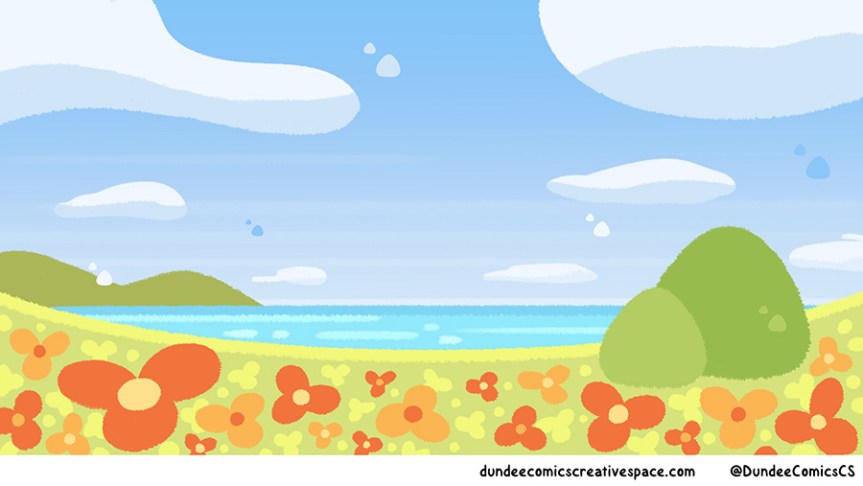
You’ve woken up in a dream world!

What comes after pencilling? Inking, of course!* There are lots of tools that you can ink with, and they each have different uses.

Want to draw lots of little intricate details? A fineliner or dip pen are great for that.
Want to cover a large area of black without it taking an eternity? Use a big brush with ink or a broad felt tip/marker.
Different tools will produce different thicknesses of line (or line weights), and your inker of choice will affect your finished drawing.
See how the drawings below look different?

The first one has the same line thickness for everything, while the second one has a thinner line for one of the characters. What does this do? It shows us that one character is in the background!
You can create this effect simply by using a thinner pen, but some tools will allow you to draw thin and thick lines. For example, take a brush pen – if you press lightly, you’ll get a thinner line. If you press hard, you’ll get a thicker line. Simple! This also applies to digital pen users.
Another thing to think about when inking is how much detail you put into your drawing. If you put lots of details into a specific area, that’s where your reader is going to look first. What do you want people to look at? What’s most important in telling your story?
Here are some drawings for you to practice inking with! Think about how thick and thin you’re making your lines, and where you might want to fill in areas of black. Most importantly, have fun with it, and stay tuned for colouring next week!

*Not always, but that’s something we’ll go into later!

You’ve worked out your story and made it into a script, so now you can start pencilling your comics! This can go through two stages:
 Thumbnails
Thumbnails are small, rough drawings that help you work out how to fit everything from the script onto the pages. They don’t have to make sense to anyone but yourself!
 Pencils
Pencils are – you guessed it – the pencil drawings of your comic page! Using your thumbnails as a guide, you draw the page larger and with more detail (how much detail you add is up to you!).
Remember our script from last week? We’ll be using that comic to show you each of the stages – pencilling, inking, colouring, and lettering – over the next few weeks. Are the pencils below anything like what you imagined when you were reading the script?

As you go through the stages of making your own comics, you’ll find out what you’re most comfortable doing. Also, with any stage of drawing, you can change your mind about how you want it to look! Maybe a panel looked really good as a thumbnail, but now looks strange at full-size? Don’t be afraid to change it.
Each of our Thursday prompts starts life as a digital pencil sketch! Have a look at how they go from sketch to finished drawings below (and see what changes along the way!).

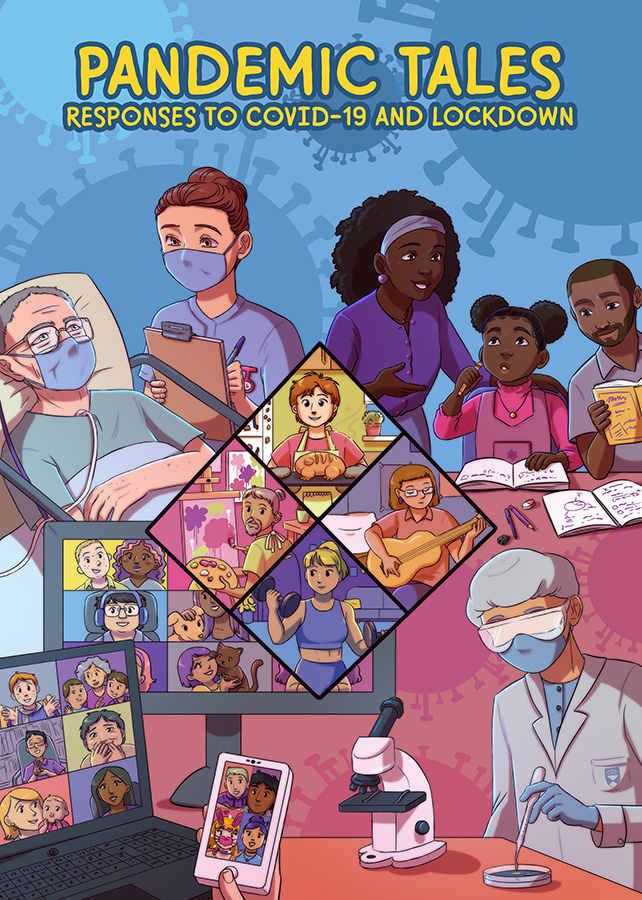
The Scottish Centre for Comics Studies is currently at work on Pandemic Tales: Responses to Covid-19 and Lockdown. The first comic comes from Anj Snape and Divya Jindal-Snape, with art by Ashling Larkin, and it is available to read here!
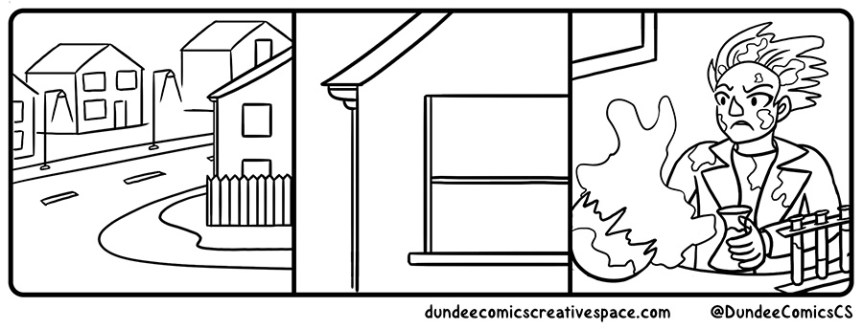
The next step after coming up with your story is to turn that story into a script! Let’s look at the same story written in two different ways, with the help of our DCCS mascot Bob* and his alien friends.

This first script is simple. We are in a street, then something happens, and a character is annoyed about it! Who is the character? What does the street look like? What exploded?! It’s up to Bob to make these decisions.

This script tells us more about what we’re seeing, when we’re seeing it, and who it is happening to! Bob can still decide how things look, but he has more of a sense of what the mysterious writer is asking for.
Is one script better than the other? As usual, the answer is NO!
It comes down to what you are comfortable writing, and who you are writing it for. Are you happy to let future-you decide how something is going to look when you start drawing, or do you want to describe it in writing first?
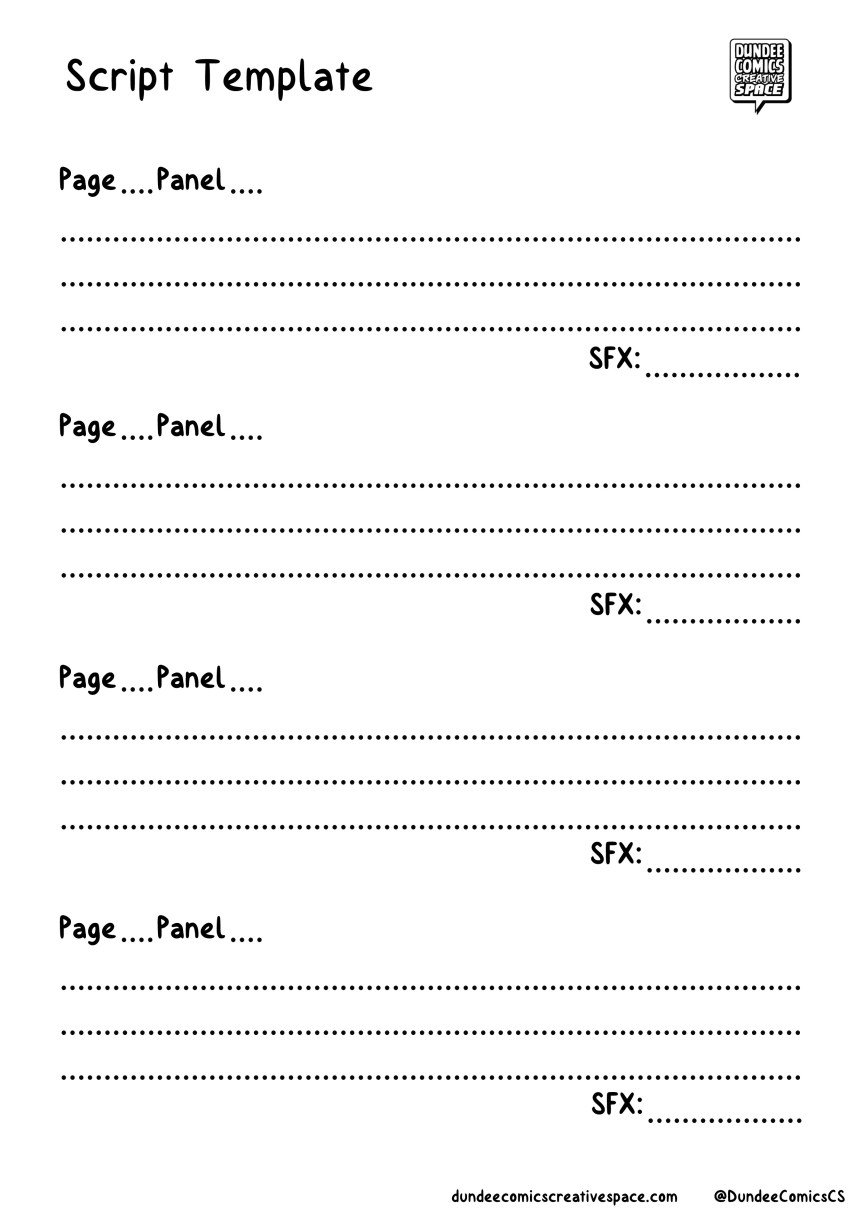
OR, are you writing a script for someone else to draw? Do you trust your artist to go wild with their imagination, or do you want to give them more direction? Maybe you could write a script for someone in your household to draw using our template below!
Whether we realise it or not, we are constantly telling stories. What ingredients do most stories contain?

They start somewhere, then something happens, and then (eventually), it has to end! Seems easy enough, right?
The tricky part is deciding what kind of story you want to tell. Maybe you’re writing the next epic superhero crossover event, or maybe you just want to make comics about what a character does from day-to-day! Regardless of the story, the tips below can help you decide what’s going to happen.

Stuck for story ideas? Maybe one of our comic prompts could help!

 Dundee Comics Creative Space